Describe the target
What to record
Give a RAL code, another colour reference or a sample to match. Specify door leaf, frame and hardware colours separately. The 12 examples do not limit your choices.
 ZHONGKAIDOORS & PROJECT SUPPLY
COLOURS & FINISHES
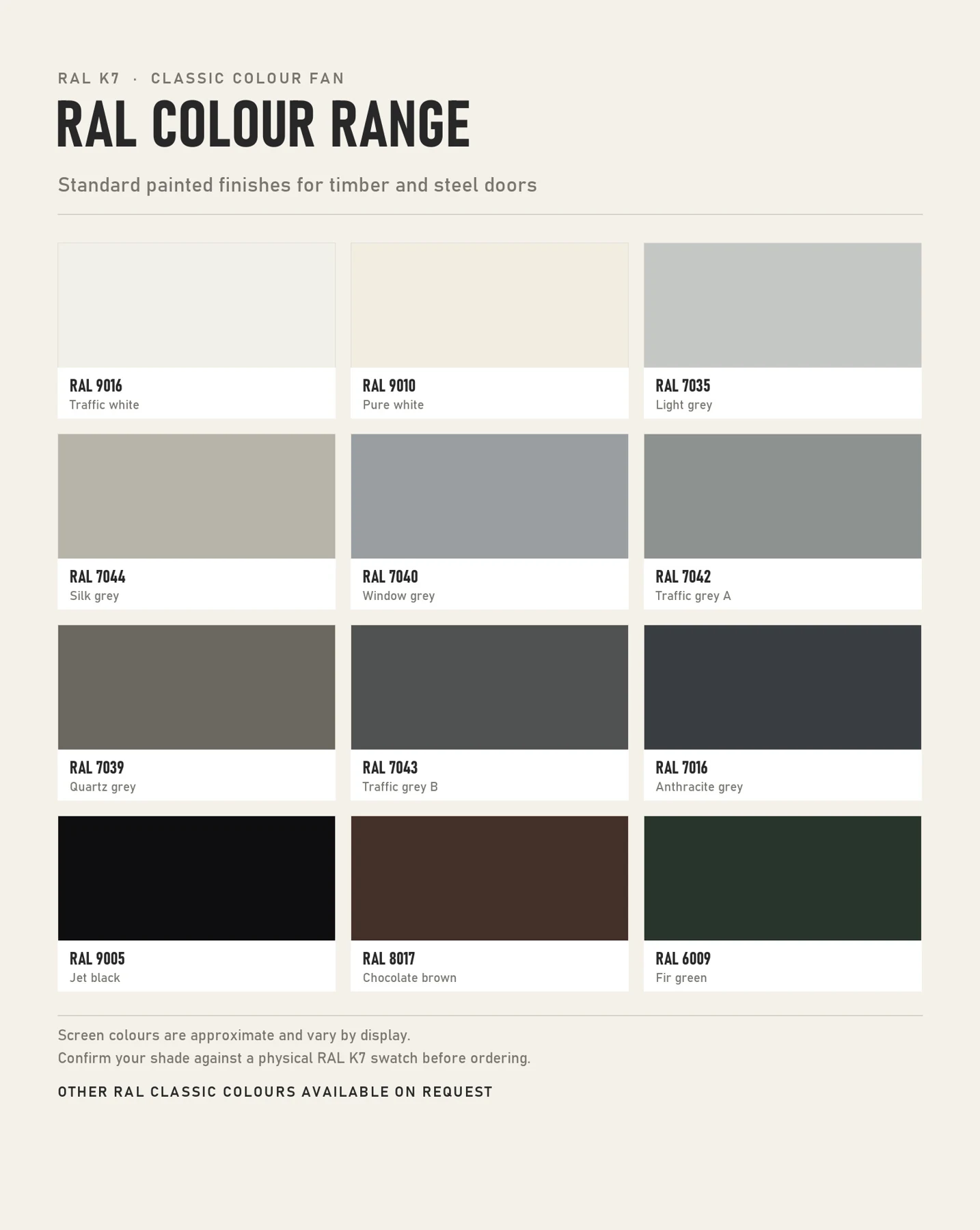
Your colour, made to order. Use a RAL code as a shared colour reference, or request a custom colour matched to your sample. The 12 swatches below are examples only; your choice is not limited to them.
FROM SCREEN TO APPROVED SAMPLE
Use any requested RAL code or custom colour as a starting point. Confirm the physical sample, sheen and texture before production.

Give a RAL code, another colour reference or a sample to match. Specify door leaf, frame and hardware colours separately. The 12 examples do not limit your choices.
Agree the sample substrate, coating, sheen and texture. Review it under the intended lighting; compare natural timber or metallic finishes using their own samples.
Record the sample ID, date, material, colour, sheen and approving person. For a batch order, agree how the approved reference and any acceptable variation will be checked.
Request a sample plan before placing the production order. Sample availability, cost and shipping are confirmed for the selected finish.
Discuss a colour sample ↗ Download colour approval checklist ↓RAL codes help customers and our team communicate colours consistently. These sample swatches are a communication guide, not a fixed colour list. Request other RAL codes or a custom colour using your own reference or physical sample.
Screen colours are approximate. Confirm the physical colour sample, surface finish and coating for your selected door before production.
Request another RAL or custom colour ↗
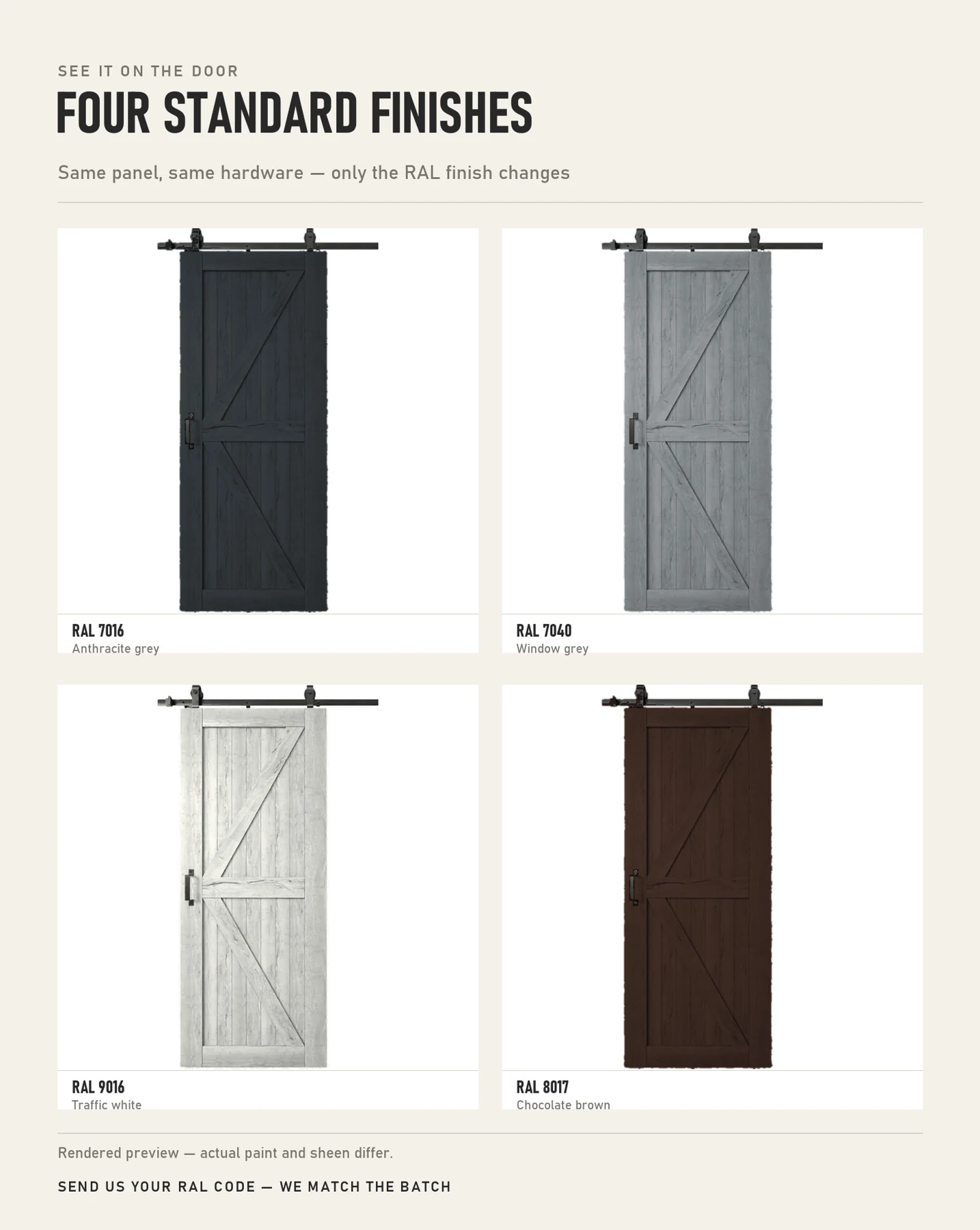
Natural timber grain, stained wood, copper surfaces and wood-effect finishes use separate samples. A RAL colour code does not define these textures.
LET’S PLAN YOUR DOORS
Start with your door type, opening dimensions, quantity and destination. We will help define the next step.